About This Course
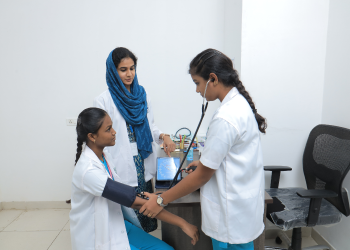
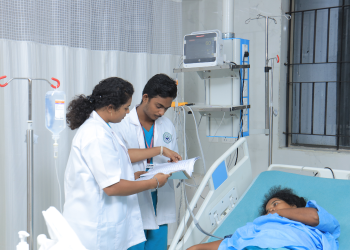
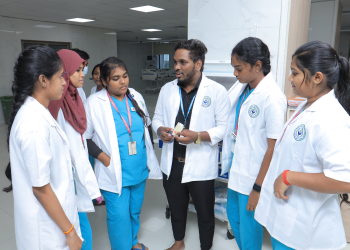
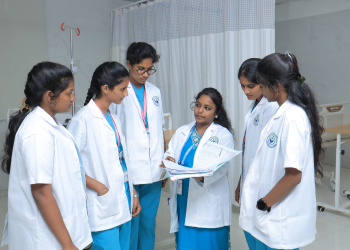
The Master of Science (M.Sc.) in Respiratory Technology is a two-year postgraduate program that combines advanced academic learning with intensive clinical training. It is designed to equip students with in-depth knowledge of pulmonary care, respiratory therapy, patient monitoring, and critical care practices. The program provides a comprehensive understanding of respiratory physiology, pulmonary function testing, mechanical ventilation, airway management, and advanced respiratory care techniques. Equipped with the necessary technical and clinical skills, students are able to assist pulmonologists and critical care specialists in a wide range of healthcare settings, including intensive care units, emergency departments, pulmonary care centres, and multi-specialty hospitals. The program ensures that graduates emerge as skilled, competent, and confident healthcare professionals by emphasizing advanced theoretical concepts, evidence-based practice, and extensive hands-on clinical experience.
Learning Objectives
The program aims to develop competent respiratory care professionals with advanced pulmonary and critical care skills. Students learn the principles and applications of modern respiratory therapy and diagnostic techniques. Clinical decision-making, patient monitoring, and airway management are strengthened. Professional ethics, patient safety, research aptitude, and lifelong learning are actively promoted.
Facilities
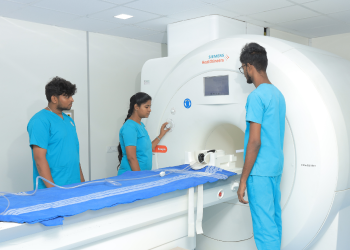
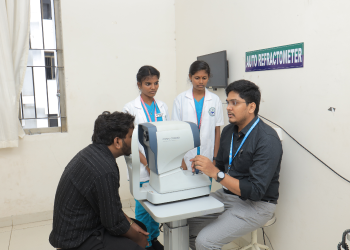
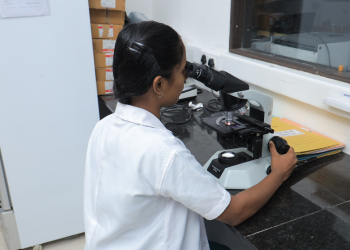
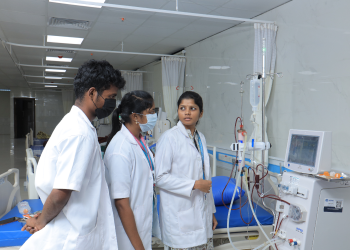
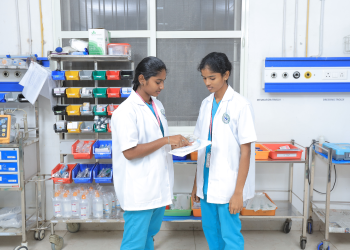
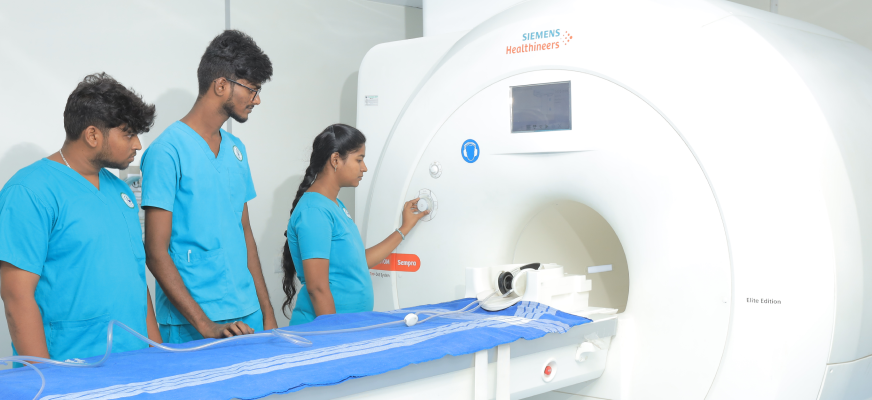
The college offers advanced respiratory care laboratories equipped with modern pulmonary diagnostic technologies. Well-equipped pulmonary function laboratories, simulation centres, and critical care units support practical learning. Clinical training in multi-specialty hospitals provides extensive exposure to diverse respiratory care procedures. Research facilities and advanced academic infrastructure promote innovation, technical excellence, and professional development in respiratory healthcare.
Career Pathway
Graduates can work as respiratory technologists in hospitals, pulmonary care centres, and specialty healthcare institutions. Opportunities exist in intensive care units, emergency departments, pulmonary rehabilitation, and sleep laboratories. Higher studies and research in respiratory sciences, critical care, and healthcare management can also be pursued. Careers in academics, clinical research, medical equipment applications, and healthcare administration are also available.